Businesses often manage information across multiple departments such as finance, human resources, sales, inventory, procurement, and operations. When every department uses disconnected systems, organizations may face duplicated data, communication problems, and limited visibility.
Enterprise Resource Planning systems help organizations bring important business processes together through a centralized platform.
What Is an ERP System?
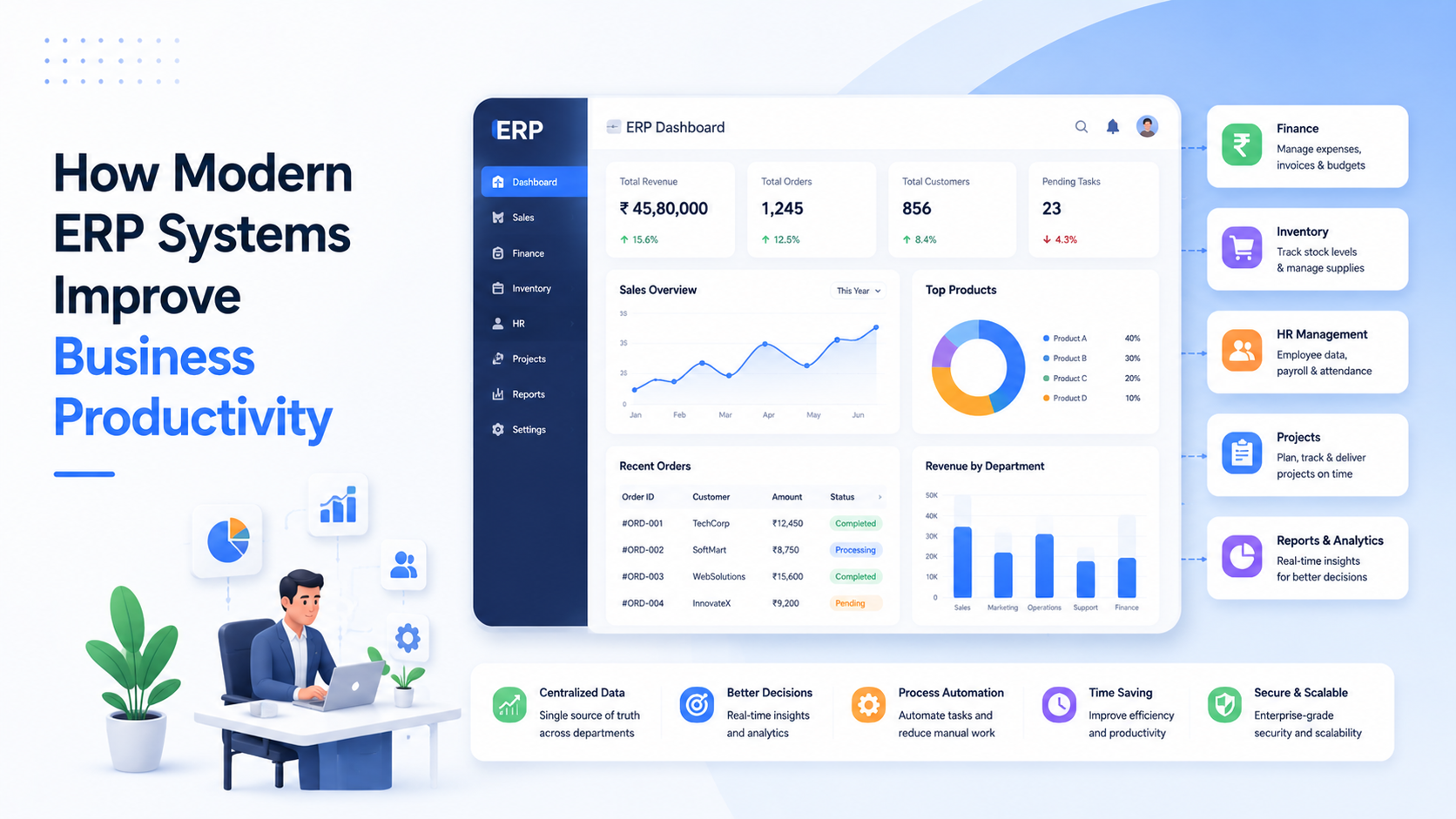
An Enterprise Resource Planning system is software that integrates multiple business processes into a unified platform. Depending on the organization, an ERP system can include modules for finance, inventory, human resources, sales, purchasing, customer management, and reporting.
Centralized Business Information
One of the primary advantages of an ERP system is centralized data. Instead of maintaining separate information across different applications, departments can work with shared business data.
Centralized information can reduce data duplication and make it easier for authorized employees to access the information they need.
Improving Business Efficiency
Process Automation
ERP platforms can automate repetitive workflows such as purchase approvals, invoice processing, inventory updates, employee management, and reporting.
Better Department Collaboration
When departments work on a connected system, information can move more efficiently between teams. This can reduce communication gaps and improve coordination.
Real-Time Visibility
ERP dashboards can provide businesses with real-time information about sales, inventory, financial activity, employees, and other operational metrics.
ERP and Business Decision-Making
Business leaders need reliable information to make informed decisions. Centralized reporting and dashboards can provide a clearer view of business performance and help identify operational trends.
Scalability
Modern ERP platforms can support organizations as their operations grow. Businesses can add users, departments, workflows, integrations, and reporting capabilities as their requirements evolve.
An ERP system connects people, processes, and information across an organization.
Key Benefits of ERP Systems
- Centralized business information
- Automated workflows
- Improved department collaboration
- Better operational visibility
- Reduced data duplication
- Improved reporting
- More consistent business processes
- Support for organizational growth
Conclusion
ERP systems can help organizations manage complex business operations through a connected digital platform. By centralizing information and automating repetitive workflows, ERP software can improve efficiency and provide better visibility across departments.
The right ERP implementation depends on the organization's processes, size, industry requirements, and long-term technology strategy.


