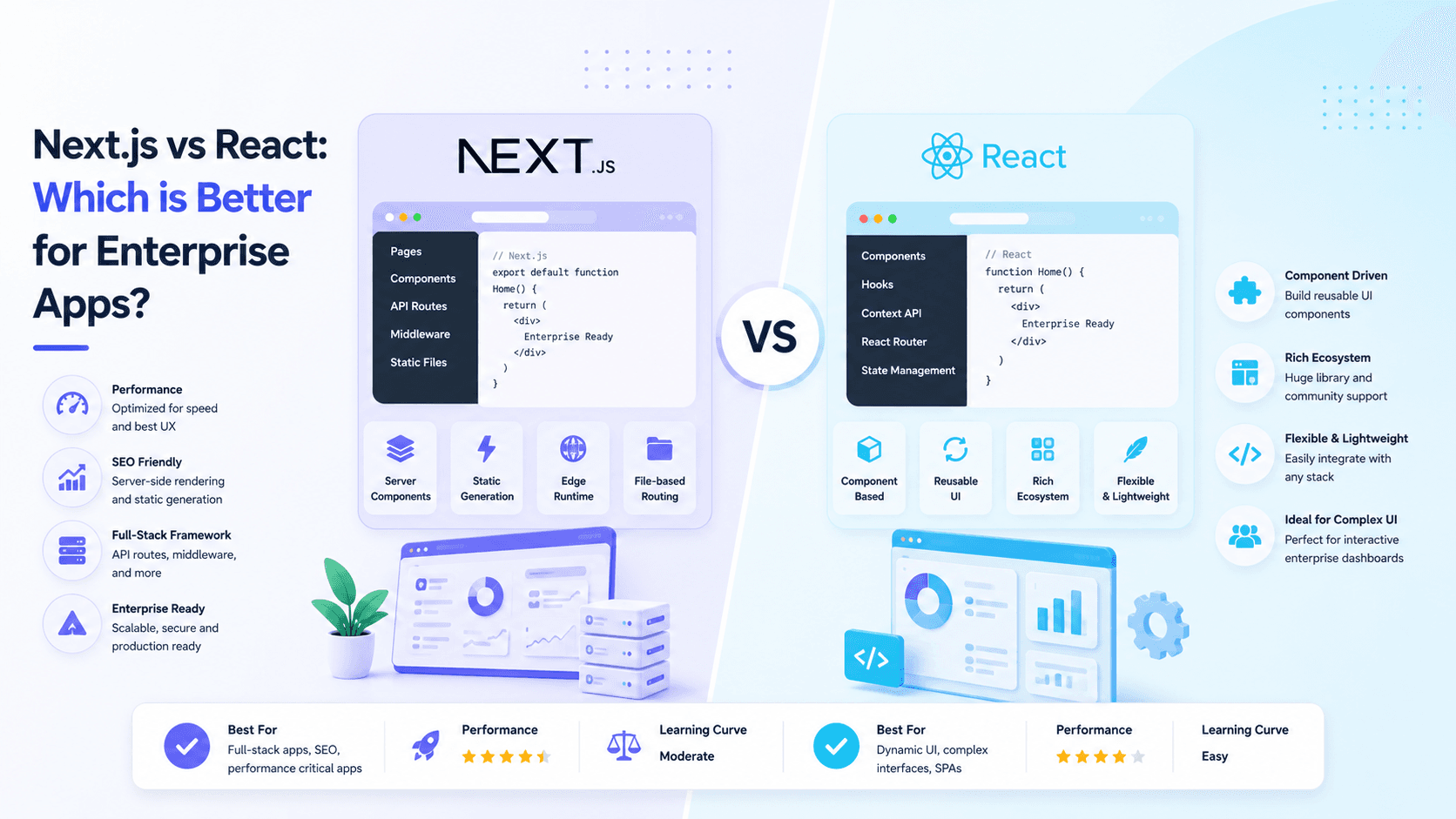
React and Next.js are two of the most popular technologies used for modern web development.
While React focuses on UI development, Next.js provides a complete framework with routing, server-side rendering, SEO optimization, and performance improvements.
Understanding React
React is a JavaScript library developed for building interactive user interfaces.
Developers use React to create reusable components and scalable frontend systems.
React provides flexibility, while Next.js adds structure and optimization for enterprise applications.
Benefits of Next.js
Next.js supports server-side rendering, static site generation, API routes, and optimized performance.

These features make Next.js highly suitable for SEO-focused enterprise platforms.
Performance and SEO
SEO is critical for enterprise websites and SaaS platforms.
Next.js improves loading performance and search engine visibility significantly.
Enterprise Scalability
Large-scale enterprise applications require scalable architecture and maintainable codebases.
Next.js provides better architecture support for modern enterprise development workflows.
Conclusion
Both React and Next.js are powerful technologies, but Next.js is generally preferred for enterprise systems requiring SEO, scalability, and optimized performance.