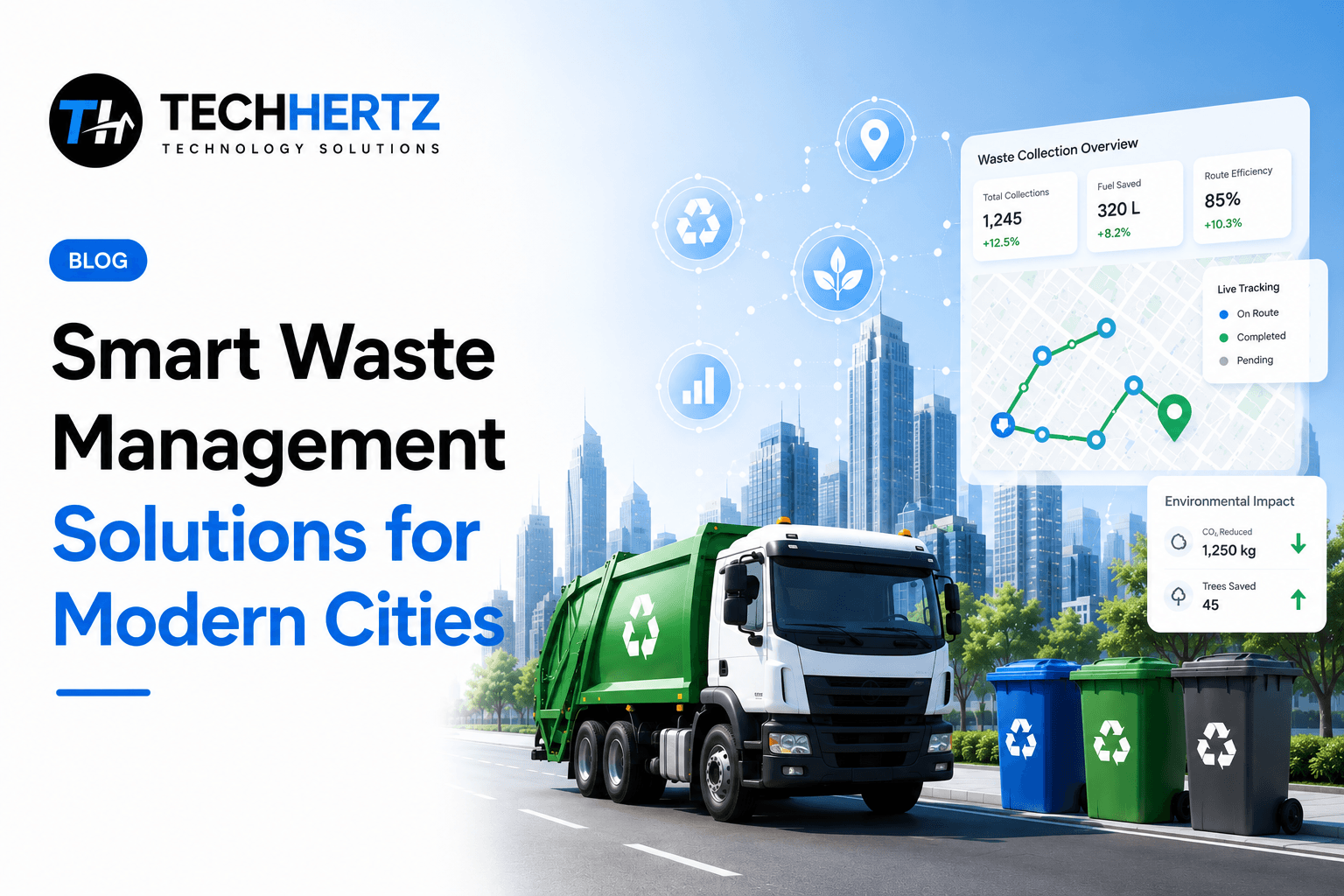
Modern cities are facing increasing challenges in waste collection, fleet management, fuel consumption, and operational efficiency. As urban populations continue to grow, traditional waste management systems are becoming inefficient, expensive, and difficult to scale.
Smart waste management solutions are helping municipalities and private waste management companies improve operations through AI-powered route optimization, GPS tracking systems, automated scheduling, and real-time monitoring dashboards.
What is Smart Waste Management?
Smart waste management refers to the use of modern technologies such as IoT sensors, GPS tracking, cloud platforms, automation systems, and data analytics to improve waste collection and disposal operations.
These systems help organizations reduce operational costs, optimize collection routes, improve workforce productivity, and deliver cleaner urban environments.
Technology-driven waste management systems improve operational efficiency while reducing fuel costs and environmental impact.
Importance of Route Optimization
Route optimization is one of the most important parts of modern waste management systems. Traditional collection methods often lead to unnecessary travel distances, traffic delays, and inefficient fuel usage.
AI-powered route planning systems analyze traffic conditions, vehicle capacity, collection schedules, and road availability to generate optimized routes automatically.
This helps waste management teams reduce operational delays and improve collection efficiency across multiple locations.
GPS Fleet Tracking and Monitoring
GPS fleet tracking systems provide real-time visibility into vehicle locations, driver activity, fuel usage, and collection progress.
Operations managers can monitor vehicles through centralized dashboards and quickly respond to delays or route changes.
Real-time monitoring improves accountability and helps organizations make data-driven operational decisions.
Benefits of Automation
Automation plays a critical role in reducing manual processes within waste management operations.
Automated dispatch systems, smart scheduling, and digital reporting tools improve workflow management while reducing human errors.
Companies can automate route assignments, maintenance alerts, attendance systems, and operational reporting through integrated ERP platforms.
Environmental Impact
Optimized waste collection routes significantly reduce fuel consumption and carbon emissions.
Smart city initiatives increasingly rely on technology-driven waste management systems to support sustainability goals and improve urban cleanliness.
Efficient waste operations also reduce traffic congestion and improve public health standards in urban areas.
Future of Waste Management Technology
The future of waste management will become increasingly connected through IoT devices, AI systems, predictive analytics, and cloud infrastructure.
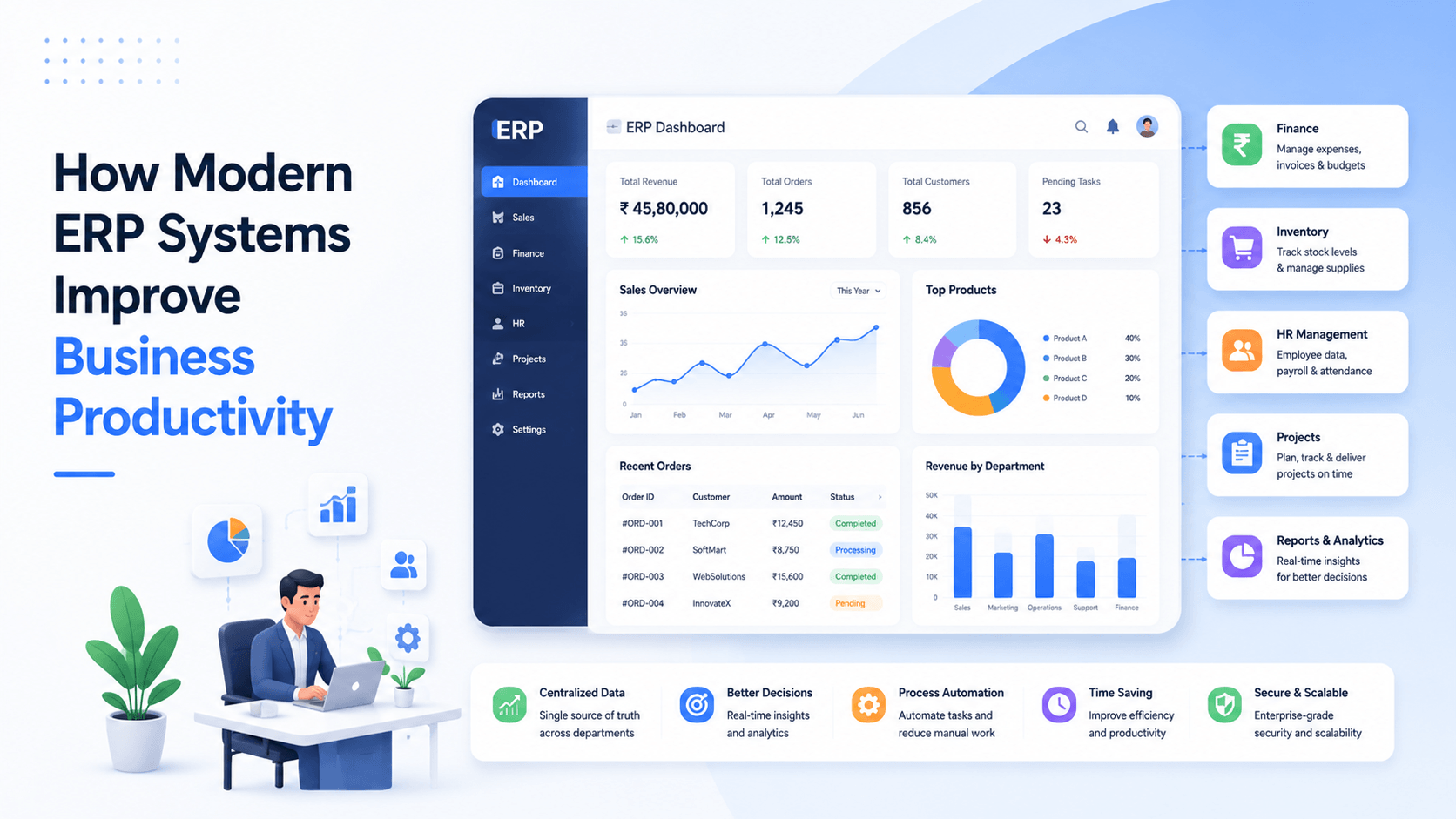
Smart bins with fill-level sensors, automated dispatch systems, and AI-powered analytics platforms will continue transforming operational efficiency.
Organizations investing in intelligent waste management technology today will gain long-term operational and environmental advantages.